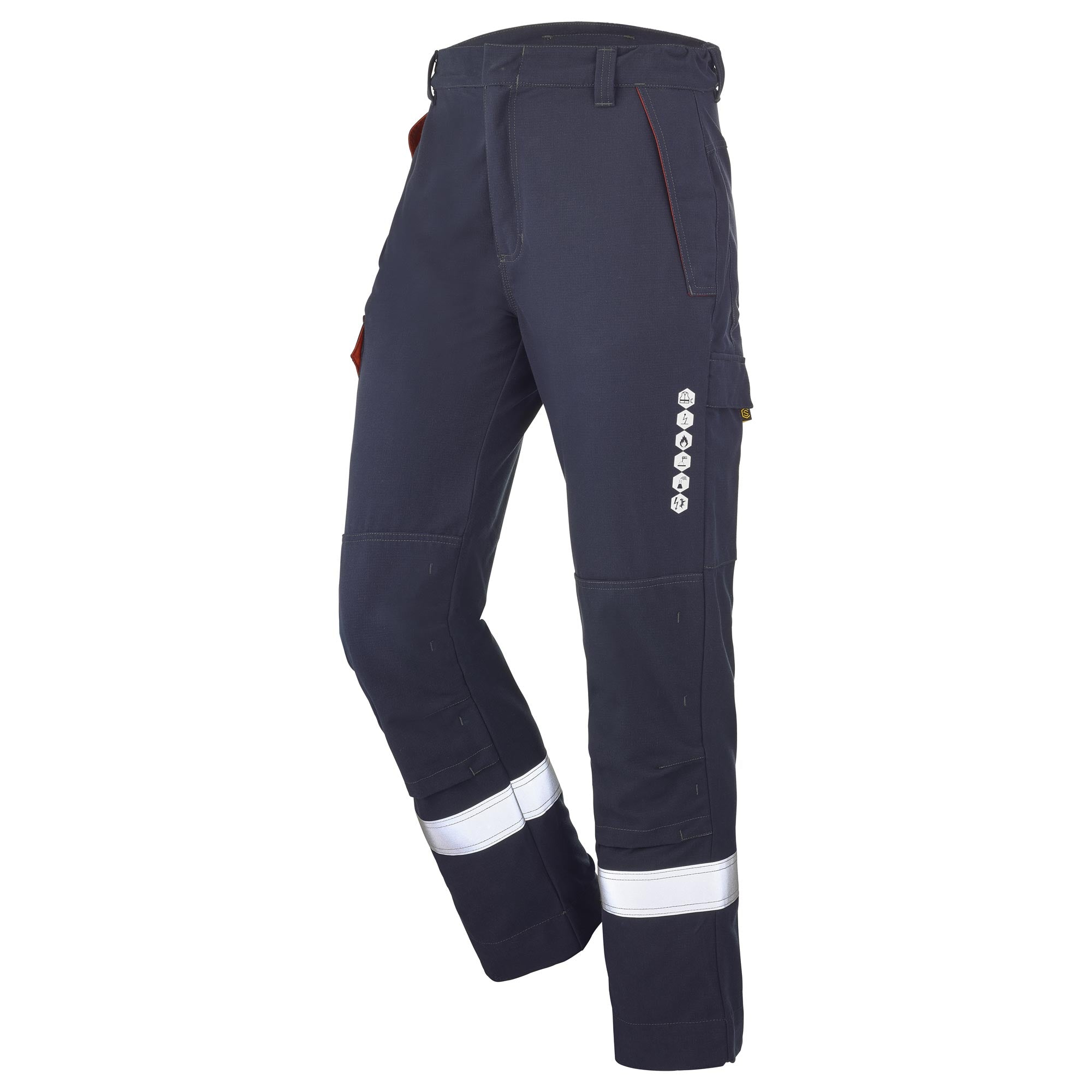
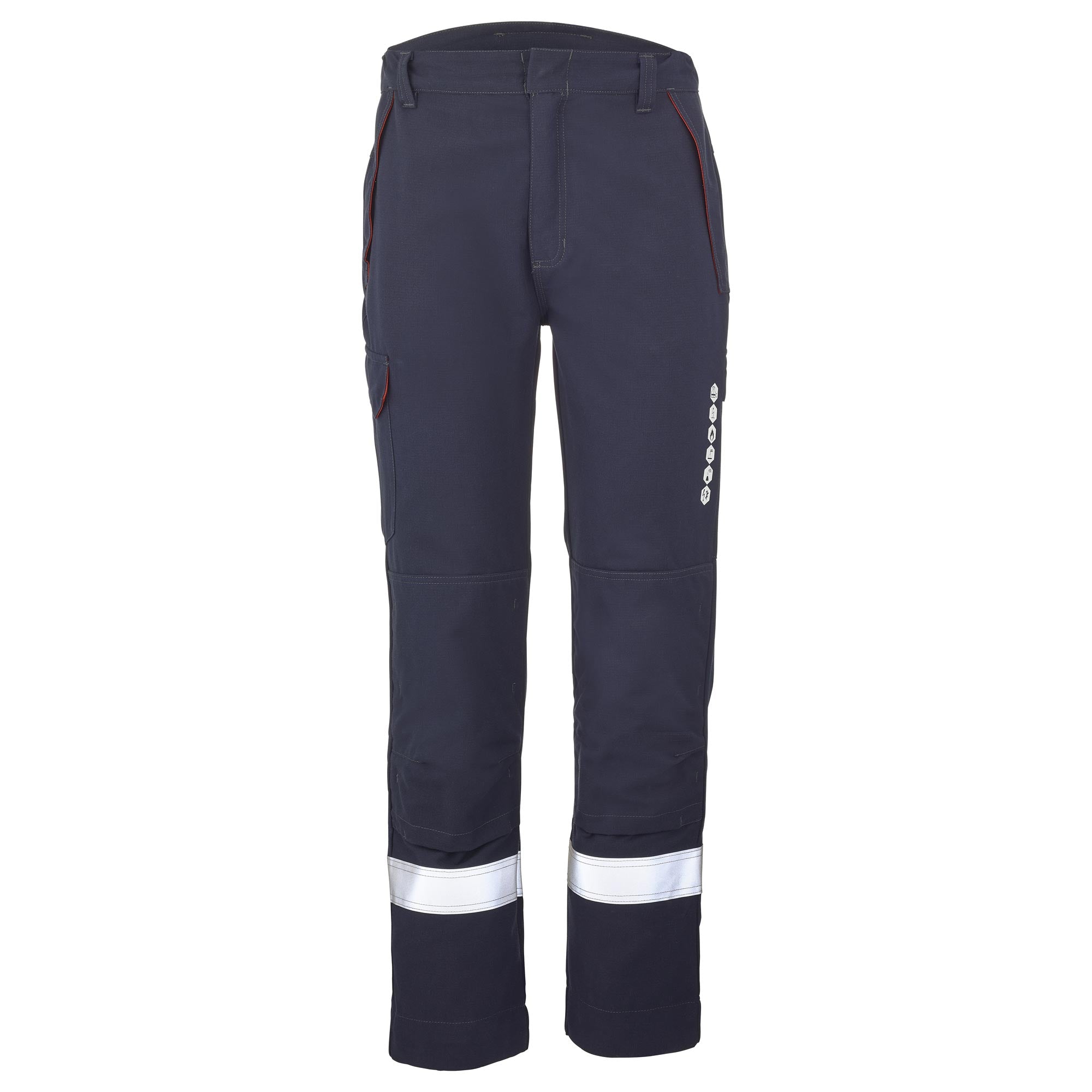
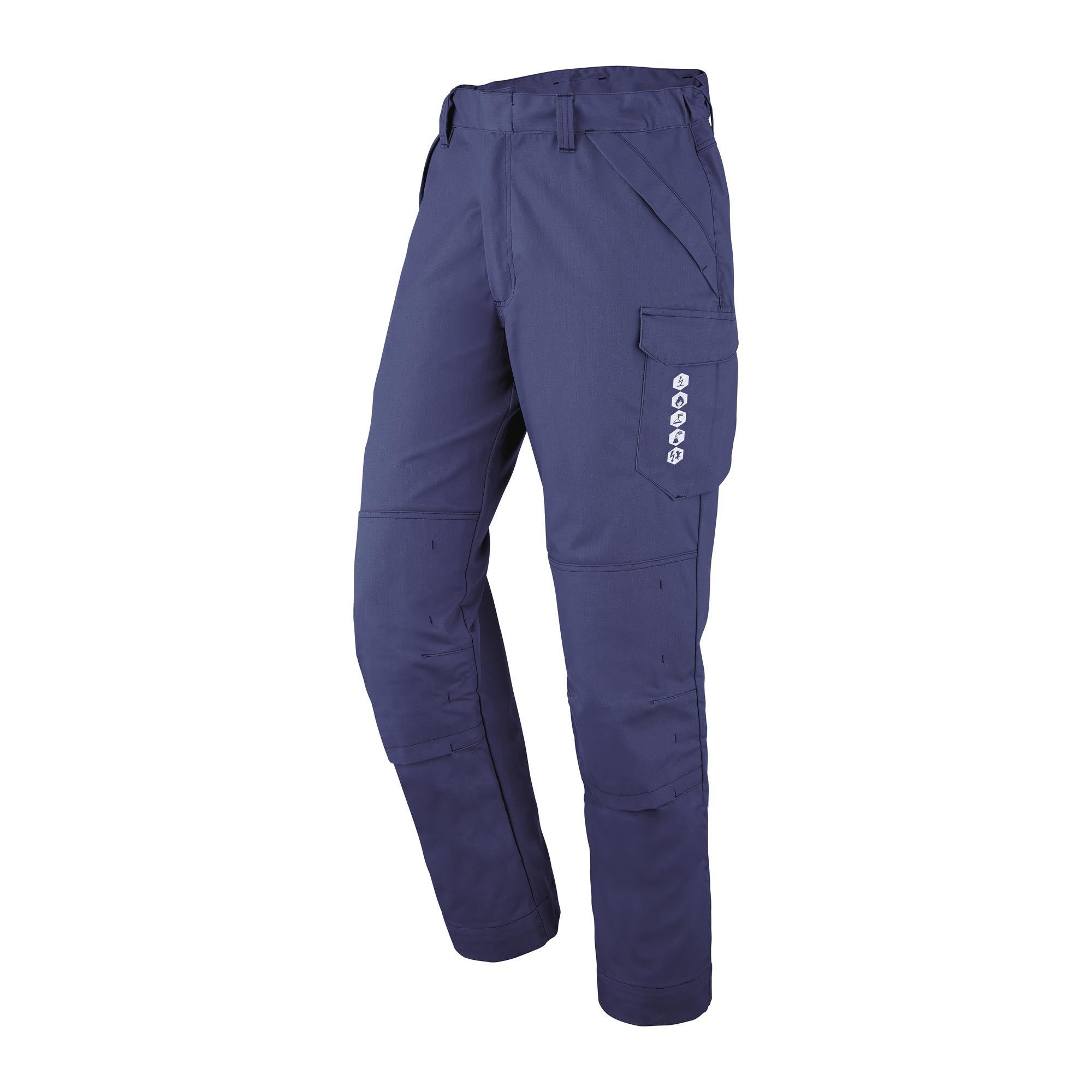
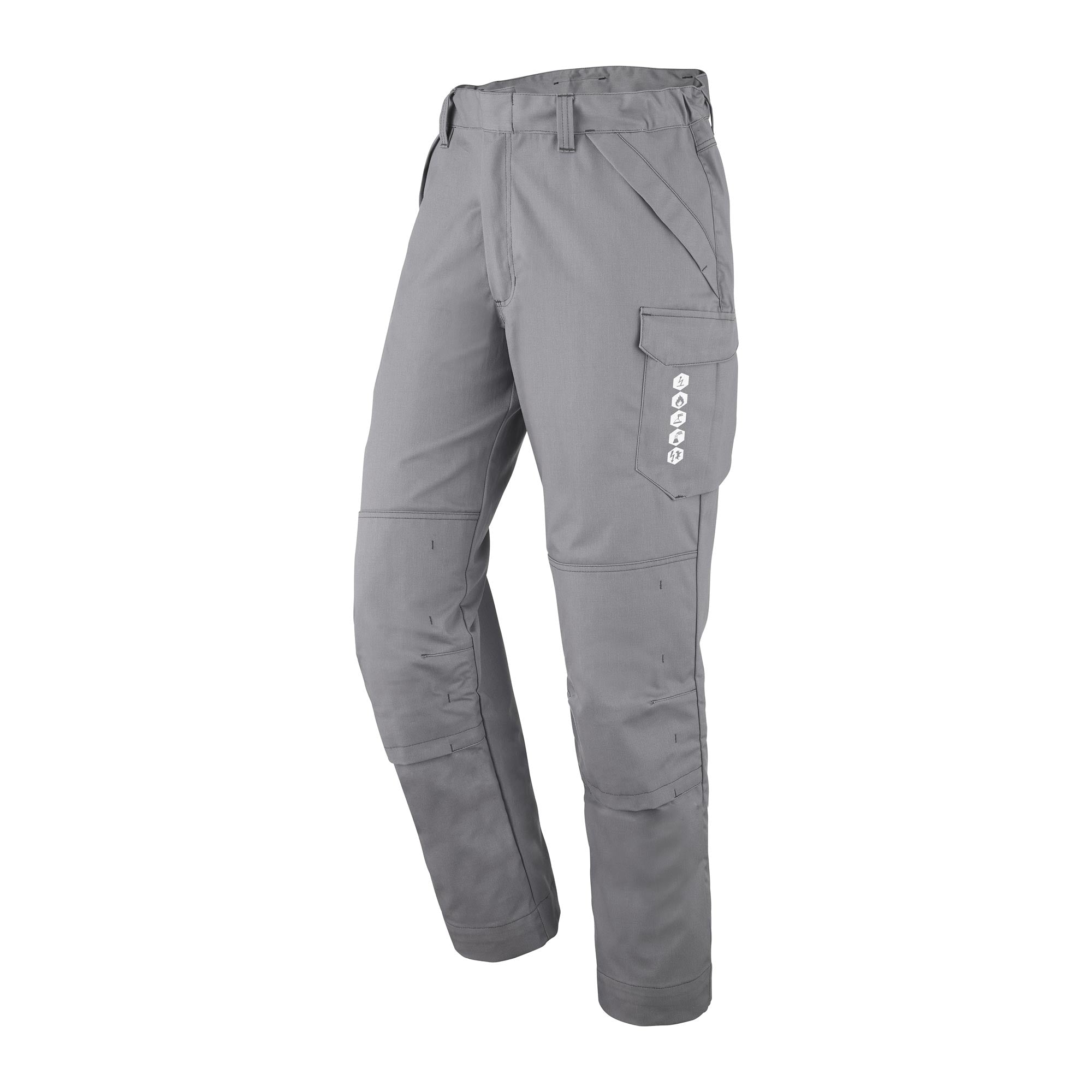
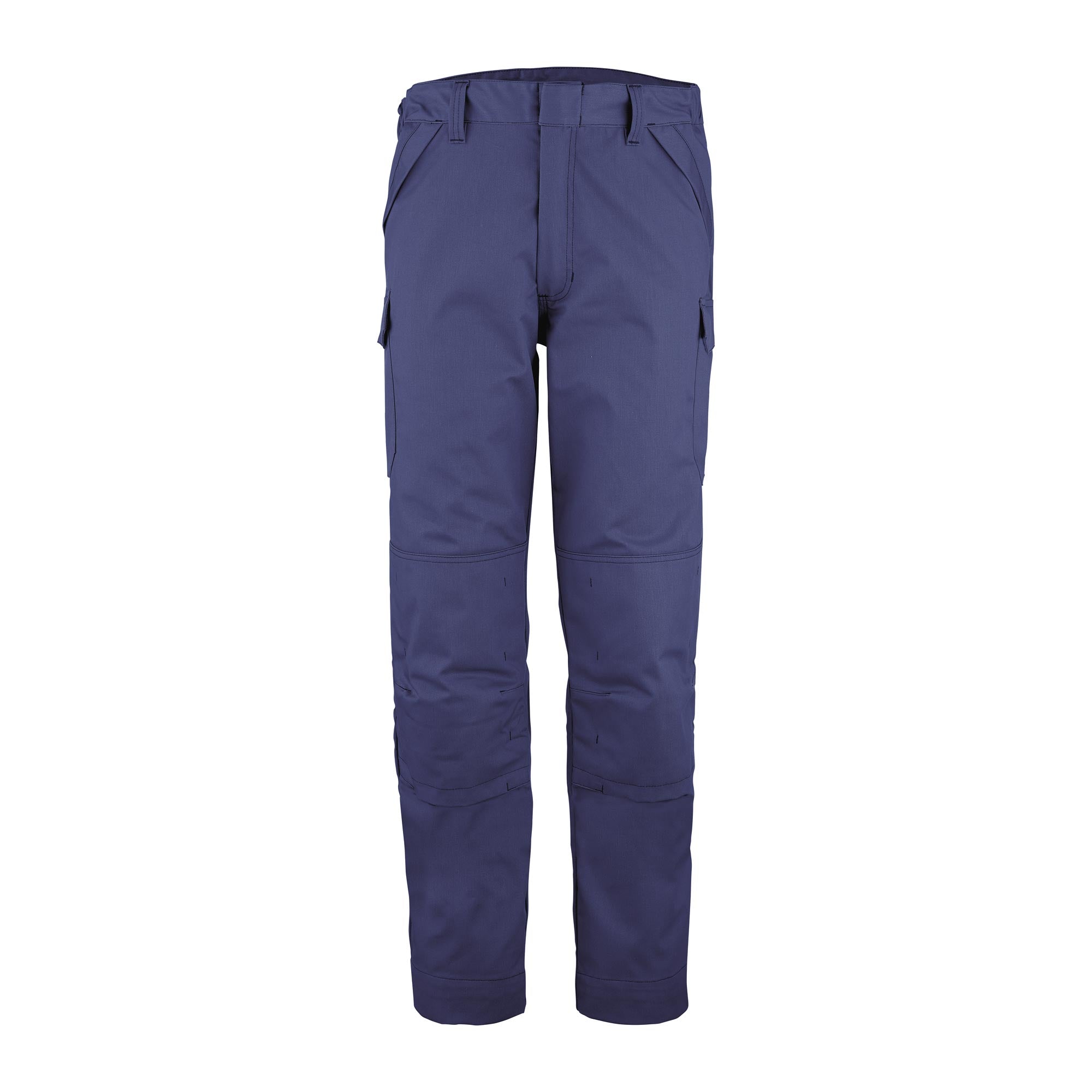
Why choose a certified welder's trousers?
Protection against welding-specific hazards
The welder's trousers are essential personal protective equipment (PPE), specifically designed to withstand the demands of welding. Unlike standard workwear, certified welding trousers effectively protect your lower limbs against often underestimated hazards.
The main risks to your legs:
Molten metal spatter: Incandescent particles (up to 1500°C) naturally fall downward. Without suitable welder's trousers, they can burn through standard fabrics within seconds, cause serious burns, and continue burning even after welding has stopped.
Radiant heat: In a crouching or seated position, your legs are exposed to intense heat (300–400°C at the surface). Certified welding trousers insulate your skin and allow you to work comfortably.
Slag and sparks: Well-designed welding trousers prevent the build-up of residue thanks to adapted cuts, secured flap pockets, and smooth fabrics that help particles slide off easily.
Accidental contact: On construction sites or in workshops, welder's trousers protect you from unexpected contact with hot surfaces.
Compliance with regulatory requirements
Choosing certified welder's trousers is a legal obligation that engages employer liability. The Labour Code requires the provision of PPE compliant with EN ISO 11611 (welding protection) and EN ISO 11612 (heat and flame) standards. Non-certified equipment may result in penalties and criminal liability in the event of an accident.
Durability and cost-effectiveness
Professional welding trousers represent a worthwhile investment:
- Lifespan: 12–24 months with intensive use vs 3–6 months for standard trousers
- Reinforced fabrics: 300–450 g/m² weight, reinforced stitching, strategic reinforcements
- Real savings: Up to 50% cheaper per year thanks to longevity
- Reduced indirect costs: Fewer accidents, sick leave, and emergency replacements
Complete your protective equipment
Welder's trousers alone are not enough. Discover our other certified equipment:
Welding jacket: Full protection paired with your welding trousers. Standard or leather-reinforced versions. EN ISO 11611 and 11612 certified.
Welding coverall: An all-in-one solution with no exposed areas. Practical and cost-effective for quick interventions.
Welding clothing: Full range certified EN ISO 11611 and 11612.
Frequently asked questions
What size welding trousers should I choose?
Go for your usual size with a slightly relaxed fit to allow freedom of movement. Welding trousers should be neither too tight nor too loose. Please refer to our size guide.
Can welder's trousers be machine washed?
Yes, at a maximum of 60°C with standard detergent, WITHOUT bleach or fabric softener. Air drying is recommended to preserve flame-resistant properties.
What is the difference between Class 1 and Class 2 (EN ISO 11611)?
Class 1: welding with minimal spatter (TIG, spot welding). Class 2: heavy spatter (MIG/MAG, arc welding). Class 2 welder's trousers are suitable for all types of welding.
How long do welder's trousers last?
Daily use: 12–24 months. Occasional use: up to 4–5 years. Premium models with leather reinforcements last even longer.
Can torn welder's trousers be repaired?
Minor repairs are possible using flame-resistant fabric in non-critical areas. Significant tears (crotch, thighs): replacement is mandatory.
Do I need welder's trousers for occasional welding?
YES, absolutely. Even a few minutes exposes you to the same hazards (1500°C). Certified welder's trousers are legally required.
What is the difference from standard flame-resistant trousers?
Welder's trousers compliant with EN ISO 11611 are specifically tested against metal spatter, sparks, and slag. Standard flame-resistant trousers (EN ISO 11612 only) do not guarantee this level of protection.
Can welder's trousers be worn in summer?
Yes, lightweight models (280–320 g/m²) are available. Some include ventilation features. Never compromise protection for comfort.
Protection against welding UV rays?
The thick fabric of welding protection trousers effectively blocks UV radiation. Specific protection (welding hood, gloves) remains essential for exposed body parts.